Image
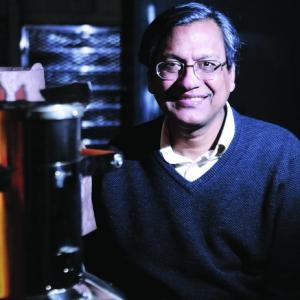
Vijay Modi
Professor of Mechanical Engineering and of Earth and Environmental Engineering; Director of the Laboratory for Sustainable Energy Solutions
Vijay Modi’s expertise spans energy resources, conversion technologies, and energy systems, focusing on their transformation to expand access and drive economic growth in emerging markets, as well as to enable transitions toward more affordable and sustainable energy supplies in both rural and urban contexts.
Modi is currently working closely with city and national agencies to understand how energy services can be more accessible, efficient, and clean. Modi’s recent research on minigrids is providing a unique understanding of consumer behavior, demand for energy, and business models for deploying energy solutions and energy efficiency.
The Quadracci Sustainable Engineering Lab (QSEL), Modi’s laboratory, aiming to assess electricity demand and growth potential, has been responsible for technologies such as “SharedSolar” and “Acacia” along with widely used tools including “Network Planner” and FormHub (today Kobo).
Modi’s early work was on computational fluid dynamics applied to optimal design of thermofluid systems, design and use of micro-electro-mechanical systems for flow measurements and use of heat/mass transfer analysis/measurements for electrochemical applications.
Between October 2011 and 2012, Modi was a member of the U.N. Secretary General’s high-level task force on “Sustainable Energy for All”(SE4All), and Modi currently leads the U.N. Sustainable Development Solutions Network working group on Energy Access for All. Modi has since supported the efforts of SE4All, World Bank, Vienna Energy Forum, and U.N. agencies.
Modi received a B.Tech in Mechanical Engineering in 1978 from the Indian Institute of Technology and a PhD in Mechanical Engineering in 1984 from Cornell University. Subsequently, he worked as a post-doctoral associate at MIT from 1984 to 1986 before joining the Mechanical Engineering Department of Columbia University. He is currently a member of the Council of Engineers for the Energy Transition (CEET) and the American Society of Mechanical Engineers.
Research Areas
- Energy Systems
- Building design and energy conservation
- Human-Centered Design
- Microgrids & Minigrids
- Decarbonization
- Last-Mile Service Delivery
Additional Information
-
Professional Experience
- Director of Quadracci Sustainable Engineering Lab, Columbia University, 2007-
- Professor of Mechanical Engineering, Columbia University, 2001-
- Department Chair of Mechanical Engineering, Columbia University, 2002-2005
- Associate Professor of Mechanical Engineering, Columbia University, 1993-2000
- Assistant Professor of Mechanical Engineering, Columbia University, 1986-1992
- Postdoctoral Associate of Gas Turbine Laboratory, Massachusetts Institute of Technology, 1985-1986
- Visiting Assistant Professor of Mechanical and Aerospace Engineering, Cornell University, 1984
-
Professional Affiliations
- American Society of Mechanical Engineers, Council of Engineers for the Energy Transition (CEET)
- An independent advisory council to the U.N. Secretary General
- ASHRAE
- AAAS
-
Honors & Awards
- Distinguished Faculty Teaching Award, Columbia, 1996
- Great Teacher Award 1997, Society of Columbia Graduates, 1997
- McMullen Fellowship, Cornell University
- Silver Medal in Mechanical Engineering, Indian Institute of Technology
- Outstanding Teaching Assistant Award, Indian Institute of Technology, 1984
- Tuition Scholarship, ASEE
-
Education
- Ph.D.,Mechanical Engineering, Cornell University
- B. Tech., Mechanical Engineering, Indian Institute of Technology